Fendi Baguette, The Original “It Bag” Is Back
If you’ve been anywhere near fashion social media lately, you’ve seen it. The Fendi Baguette is having a moment, and this time it feels like more than just a nostalgia play.
Here’s the full story on why everyone is losing their minds over a bag that’s almost 30 years old.
A Quick History Lesson
The Baguette was created in 1997 by Silvia Venturini Fendi, and the name is exactly what you think it is. It was designed to be carried the same way a French woman carries a baguette home from the bakery: tucked snugly under the arm, no fuss, no overthinking it. Small, slim, and a little bit smug about how good it looks.
What made it revolutionary was its timing. The late 90s were deep in a minimalism obsession. Clean lines, neutral tones, nothing too loud. The Baguette walked in and said absolutely not. Sequins, embroidery, bold prints, wild textures, logo-everything. It became the bag that proved personality was a design choice, not an afterthought. It essentially invented the concept of the “It Bag” as we know it today.
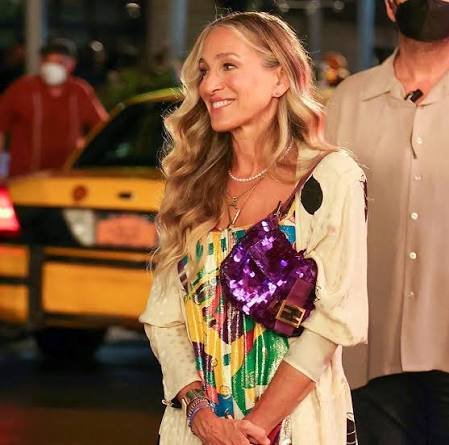
Then Sex and the City happened, and Carrie Bradshaw turned it into a cultural artifact with four words: “It’s not a bag. It’s a Baguette.” The rest is fashion history.
So What’s Actually Happening Now?
This is where it gets interesting. For Fendi’s Fall/Winter 2026-27 collection, Maria Grazia Chiuri chose the Baguette as the centrepiece of her debut show for the house. And this is not just any creative director taking a swing at a classic. Chiuri was actually part of the original accessories design team when the Baguette was first developed in 1997. She has a personal, almost proprietary relationship with this bag.
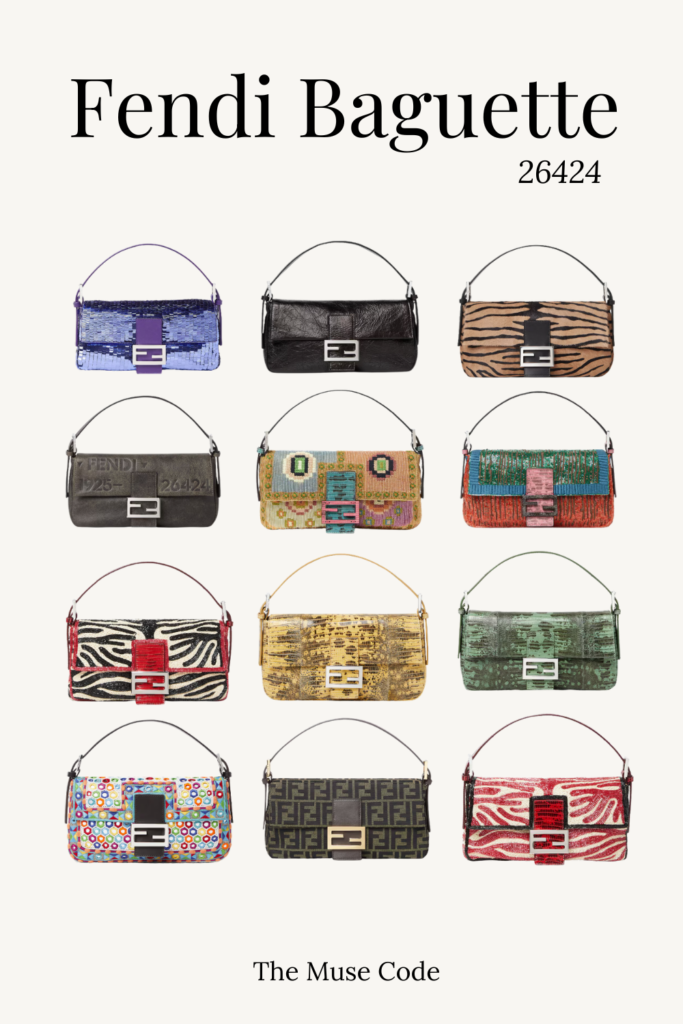
The relaunch is called the Baguette 26424, named after the bag’s original style code. Fendi is leaning into that detail intentionally. This is not a reimagining or a modern update. It is the original silhouette, the original proportions, the original under-the-arm logic, brought back exactly as it was. The East-West shape that looked slightly stubborn and completely cool in the 90s turns out to look exactly the same way now.
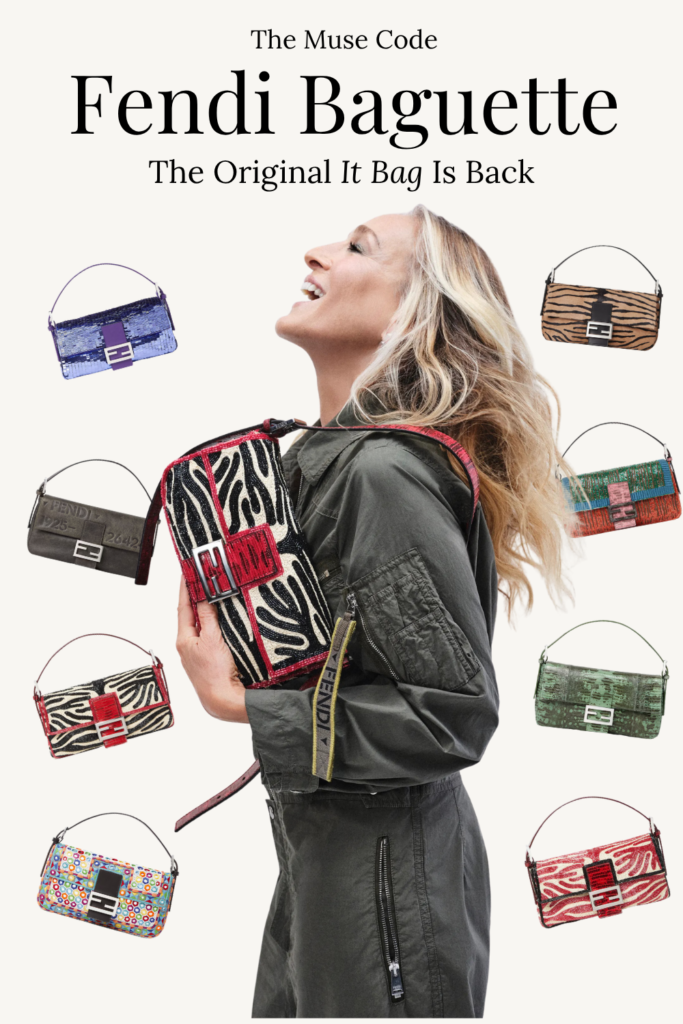
What has changed is the material vocabulary. The collection arrives in 20 variations: beading, paillettes, zebra print elevated with sequins and red beadwork, leopard with floral embroidered inlays, crackle leather, saddle stitching, and even a plush Mamma Baguette in black fur. Each one feels like a small piece of craft rather than a product. The packaging plays into this too. Every bag ships in a custom wooden crate with stencil detailing, inspired by how artwork gets sent to exhibitions. Fendi is positioning the Baguette as a collectible, not just an accessory.
The Campaign Is the Story
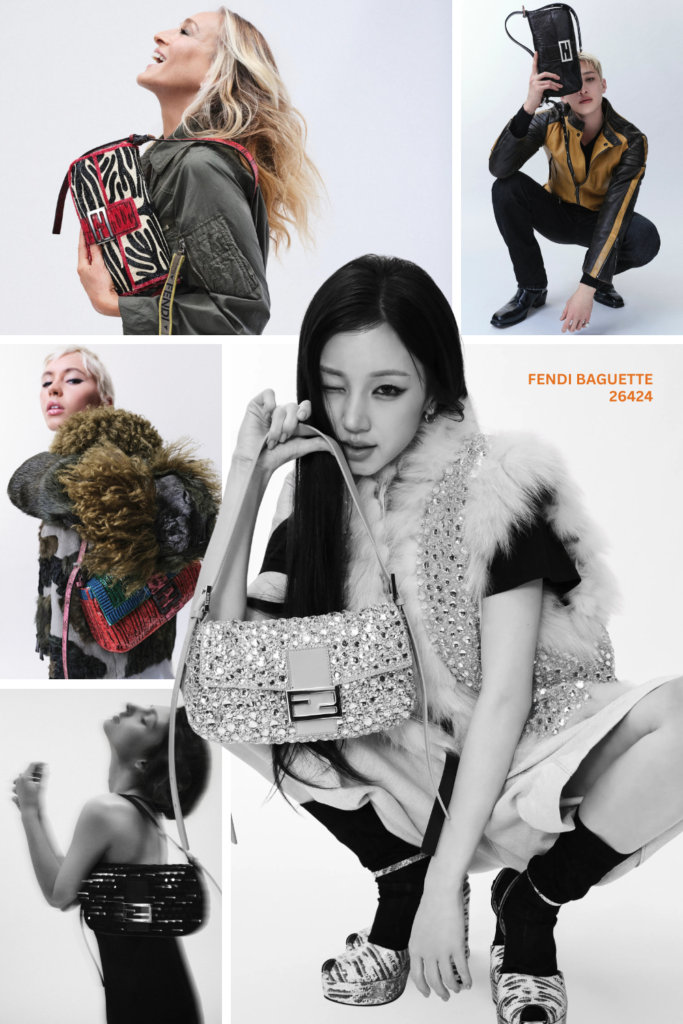
The campaign, shot by Bibi Borthwick, is genuinely one of the better ones we’ve seen in a while. The cast reads like someone tried to cover every corner of the cultural conversation at once: Sarah Jessica Parker, Jessica Alba, Emma D’Arcy, Iris Law, Sophie Thatcher, Bang Chan, Song Yuqi, Ren Meguro, MINA, and Tecla Insolia. That is a deliberately global, deliberately cross-generational lineup.
Each person was essentially asked what the Baguette means to them, and you can see it in how each image is shot. Jessica Alba’s black sequin version has a low-key party girl energy. Emma D’Arcy goes plain black leather, clean and authoritative. Sophie Thatcher’s intricately embroidered Baguette reads thoughtful and bohemian. The whole campaign feels personal in a way that luxury bag campaigns rarely do. It helps that the soundtrack is Addison Rae’s “Fame is a Gun,” which adds just the right amount of chaotic fun to the whole thing.
Why This Relaunch Actually Works
Here is the thing about nostalgia done right: it does not try to convince you the past was better. It just reminds you why something mattered in the first place, and then trusts you to feel it.
Fendi is not trying to make the Baguette relevant by changing it. They are making it relevant by being completely unapologetic about what it is. Original code. Original shape. Original attitude. The new finishes are a nod to the house’s craft expertise, not an attempt to modernize for the sake of it. And having Chiuri lead this is not a coincidence. Her personal history with the bag gives the whole thing an authenticity that a typical creative director hire would not.
For collectors especially, the 26424 designation matters. Reissuing from a specific reference point creates a clearer provenance story, which is increasingly important in a market where vintage and archive pieces are being taken just as seriously as new releases. When Fendi relaunches an icon properly, the originals get more interesting too.
The Baguette was never just a bag. It was a declaration that your accessories could have a personality louder than your outfit. Thirty years later, that still sounds pretty good.